A commercial building that receives a fresh coat of paint sends a signal of care, professionalism, and renewal. But behind that clean exterior lies hard work, coordination, and planning. When you are preparing for a large-scale painting project for offices, warehouses, retail space, or multifamily properties, thorough preparation makes all the difference. This guide walks through what you should expect, what steps you should take, and how to set your project up for a successful outcome.
Understanding the Scope and Goals
Before any brushes touch surfaces, you must define the full scope of work. You and your contractor need to work side by side to understand the scale of walls, trims, ceilings, specialty surfaces, and high-traffic or decorative zones. You consider what style of paint will be used, the amount of surface preparation, and how much repair or patching is necessary. You also think about color schemes, finishes, and how each area’s exposure (sunlight, weather, interior wear) might affect the paint choice. Once the vision is clear, you and your contractor can align on timelines, access windows, safety needs, and staging areas.
Site Preparation and Protection
The success of any large paint job depends on preparation. Before painting starts, you move or cover furniture, equipment, HVAC units, fixtures, and flooring. You seal off areas adjacent to work zones to keep dust and debris contained. For exterior work, you inspect and stabilize surfaces, remove flaking or peeling paint, power wash, and let surfaces dry. You patch cracks, repair damage, and smooth rough textures so the finish will adhere properly. You coordinate with other trades, plumbers, electricians, and carpenters to have necessary repairs or installations done first. When surfaces and surroundings are ready, painting crews can proceed without repeated interruptions.
Scheduling, Access, and Logistics
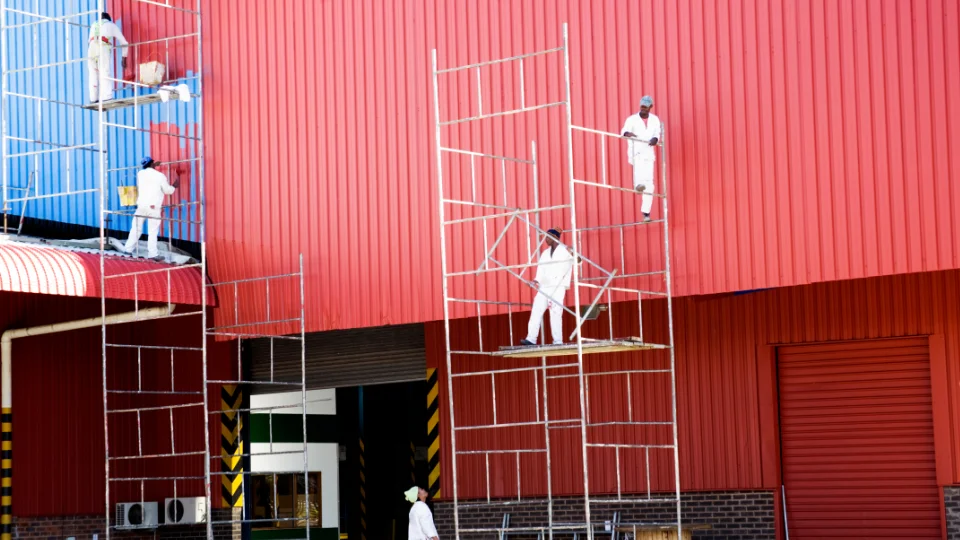
Large paint projects often run in phases and require careful sequencing. You plan around business hours, deliveries, tenant use, and public access. You may opt to paint one wing at a time or work in zones, so you do not shut down the entire facility. Workers must scaffold, access lifts, or extend equipment into tight spaces, so you designate staging zones and pathways free from obstacles. You schedule deliveries for paint, tools, and supplies so crews are never paused for missing materials. You also plan for changing conditions—weather, humidity, temperature shifts—that might delay coatings or finish times.
Quality Control and Inspection
Ongoing oversight maintains consistency and corrects mistakes early. You walk with the project manager through painted zones to check coverage, edge work, drips, or missed spots. You verify that primers and sealers are applied evenly and that topcoats match color consistency. You review that transition areas, corners, and hard-to-reach spots receive the same attention as high-visibility zones. If defects appear, you address them immediately rather than letting them compound. Near the end, you do a full walkthrough to catch any last touch-ups before final acceptance.
Safety, Environmental Factors, and Compliance
Large commercial paint projects often require special safety protocols. You need fall protection, scaffolding safety, ventilation, and personal protective equipment in enclosed or poorly ventilated areas. You also comply with regulations for disposal of paint waste, surface preparation runoff, and volatile organic compound (VOC) levels. You consider how humidity, temperature, and dust might interfere with curing times. Especially when working in occupied buildings, you coordinate with building management so occupants are safe and operations can run with minimal disruption.
Final Walkthrough and Closeout
When painting is complete, you inspect with the contractor to ensure every surface meets standard. You collect final touch-up notes and verify that fixtures, trim, and finishes are clean and aligned. You request as-built drawings, warranties, material specs, and care instructions for maintenance staff. You ensure cleanup is thorough, removal of tape, masking, leftover materials, and any debris. A clean handoff strengthens your confidence in the work done and sets the tone for future maintenance.
Why Choose CoreCom Commercial Painting
Carrying out a large-scale commercial paint project is a major investment in appearance, asset value, and brand image. At CoreCom Commercial Painting we bring experience across East Coast projects, a commitment to clear communication, and a focus on high standards in every phase from prep to finish. When you need a partner who knows how to manage complexity, meet deadlines, and deliver exceptional results, turn to CoreCom. Reach out via our contact page and let us help bring your vision to life.